In slang, glazing means praising someone way too much. If you are “glazing” a person, you are hyping them up so hard that it sounds fake, over the top, or a little embarrassing. When someone says “stop glazing,” they mean “stop overpraising them” or “stop sucking up.”
The word comes from the sweet, shiny coating on a donut: you are covering someone in so much praise that they look better than they really are. It became huge on TikTok, Twitch and X, especially in sports and gaming debates. Below you will learn the exact meaning, real examples, how to reply, and the non-slang meanings of glazing people also search for.
Glazing Meaning at a Glance
| Detail | Answer |
|---|---|
| Slang meaning | Praising or hyping someone too much |
| Common phrases | “Stop glazing,” “glazing him,” “self-glazing” |
| A person who does it | A “glazer” |
| Tone | Teasing and casual; usually a light insult |
| Where you see it | TikTok, Twitch chat, X (Twitter), Instagram comments, group chats |
| Similar terms | Sucking up, overhyping, simping, stanning |
| OK at work? | Better to avoid it in formal settings |
What Does Glazing Mean in Slang?
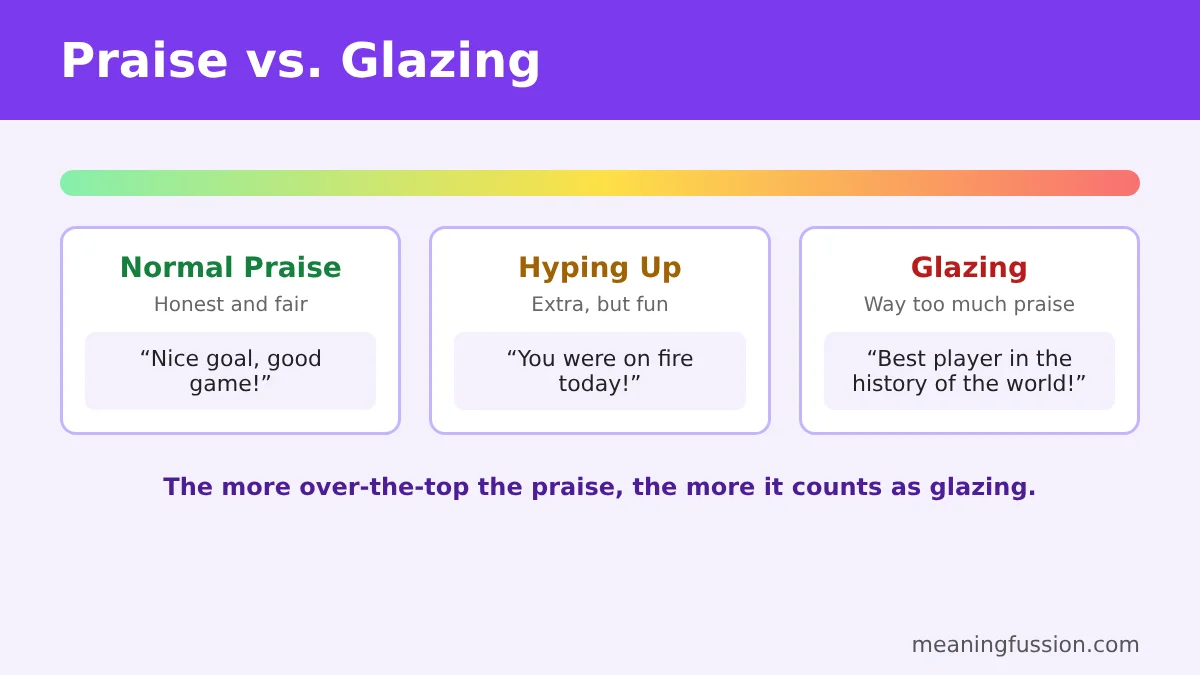
Glazing means giving someone excessive, unearned praise. It is not just a compliment. A compliment is “nice shot.” Glazing is “that was the greatest shot in the history of the sport, he is a god.” The praise is so big that it stops sounding honest.
People usually use the word to call out someone else, not to describe themselves. If your friend says you are glazing, they are telling you, in a joking way, that you are overdoing it.
What Does “Stop Glazing” Mean?
“Stop glazing” means “stop overpraising” or “calm down with the compliments.” It is the most common way the word is used, especially in comment sections when a fan defends their favorite player, creator or celebrity a little too hard.
What Does “Glazing Someone” Mean?
Glazing someone means hyping up one specific person too much, like a teammate, a streamer, a celebrity or even a crush. “He is always glazing his favorite streamer” means he praises that streamer constantly.
What Does “Self-Glazing” Mean?
Self-glazing means praising yourself too much, like bragging or hyping your own work. “Bro posted his own highlight reel with 20 fire emojis. That’s self-glazing.”
What Is a Glazer?
A glazer is a person who glazes. If someone always takes one side and praises that person no matter what, friends might call them “the biggest glazer in the chat.”
Examples of Glazing in Real Life
- Sports: “He missed three shots and you’re still calling him the GOAT? Stop glazing.”
- Gaming and streams: “Chat is glazing so hard over one lucky win.”
- Celebrities: “The comments are glazing her outfit like it’s a museum piece.”
- Friends: “You’re glazing me rn, I only made toast.”
- Crush: “Don’t be glazing me just because you want my fries.”
Example Chat: Glazing Between Friends
Example chat
Here, the friend is not angry. “Stop glazing” is a playful way of saying “you are hyping him up way too much.”
Where Did the Slang Word Glazing Come From?
The everyday word “glaze” means a shiny, sweet coating, like the glaze on a donut or a cake. In slang, glazing someone means coating them in sugary praise until they look better than they are. According to Merriam-Webster, this slang use of “glaze” started showing up on social media in the early 2020s and usually suggests the praise is not deserved.
The slang meaning spread through Twitch streams, TikTok and sports fan accounts on X in the early 2020s, and became one of the most common Gen Z words by 2024 and 2025. It even reached tech talk in 2025, when ChatGPT users, and OpenAI CEO Sam Altman himself, said an update made the chatbot “glaze” people too much by flattering every idea.
Some people also point out that “glaze” has a crude meaning online, which is why parents and teachers sometimes find the word uncomfortable. Most teens, though, use it simply to mean “overpraising.”
Prefer watching? This short video from The Daily Dot explains the glazing meaning in Gen Z slang, where the word came from and how people use it online:
Glazing Slang Timeline: How the Searches Grew
Ahrefs shows the date each search phrase was first seen in its US database. This is not the exact day the word was invented, but it is a reliable picture of how the slang spread from one basic question into many specific ones:
Source: Ahrefs Keywords Explorer “First seen” dates, United States, checked October 2026.
The pattern is clear: first people asked what the word means, then how to use it (“stop glazing”, “self glazing”), and by 2025 to 2026 they were asking about its origin and how it applies to a person.
How to Use Glazing in a Sentence
Knowing the glazing meaning is one thing. Using it naturally is another. The word works as a verb (“you’re glazing”), a noun (“the glazing is crazy”) and a person (“he’s a glazer”). Here are real-style sentences you will see in comments, group chats and streams:
- Verb: “You’re glazing him so hard, he scored one goal.”
- Verb (command): “Okay, stop glazing, it’s just a new haircut.”
- Noun: “The glazing in this comment section is out of control.”
- Person: “Don’t ask Sam, he’s the biggest glazer of that rapper.”
- Self: “Not you self-glazing your own Instagram post again.”
- Question: “Am I glazing, or was that actually the best movie of the year”
A simple tip: if you could replace the word with “overpraising” or “hyping up way too much” and the sentence still makes sense, you are using glazing correctly.
Compliment or Glazing? A Quick Check
Not every nice comment is glazing. Teens and adults both use this simple test to tell the difference:
| Question to ask | Normal compliment | Glazing |
|---|---|---|
| Is the praise true | Yes, it matches what happened | It is stretched or exaggerated |
| How big are the words | “Nice job,” “that was good” | “GOAT,” “best ever,” “nobody can touch him” |
| How often does it happen | Now and then | Every time, no matter what |
| Is there a hidden reason | No | Sometimes, like wanting a favor |
Glazing in Sports, Gaming and Fandoms
The slang is most common in three places online. In sports, fans get called out for glazing when they call a player the greatest of all time after one good game. In gaming and streaming, chat accuses viewers of glazing a streamer who can do no wrong. In music and celebrity fandoms, “stop glazing” is a quick reply to fans who defend every song or every choice of their favorite star.
In all three, the word is usually playful. It is a way of saying “be real for a second” without starting a fight. If you want to learn more words that pop up in these spaces, our Gen Z slang dictionary explains the most common ones in plain English.
What Parents and Teachers Should Know About Glazing
If you hear a kid say “stop glazing,” there is usually nothing to worry about. It almost always means “stop overpraising.” Because the word also has a crude meaning on some websites, it is a good idea to know the context: if it is said as a joke about compliments, it is the harmless slang meaning. Our guide to Gen Z slang for parents covers more words like this.
Is Glazing a Bad Word?
In most cases, no. Glazing is a casual, teasing word, not a swear word. Calling someone a glazer is like calling them a suck-up: mildly insulting, usually playful.
Because of its crude double meaning, it is best to skip it in emails, at work, at school, or with people you don’t know well. Use “overpraising,” “hyping up” or “sucking up” instead.
How to Reply When Someone Says You’re Glazing
- Own it: “Okay maybe I’m glazing a little, but he’s still good.”
- Defend yourself: “That’s not glazing, that’s facts.”
- Joke back: “I’m not a glazer, I’m a fan with taste.”
- Turn it around: “Says the one who glazes his crush daily.”
Glazing vs. Similar Slang
| Term | Meaning | Difference from glazing |
|---|---|---|
| Glazing | Praising someone too much | Focus is on over-the-top praise |
| Simping | Doing too much for someone you like | Usually about a crush, and includes actions, not just words |
| Stanning | Being a huge fan | Can be positive; glazing is usually a call-out |
| Sucking up | Flattering someone to get something | Older phrase; glazing does not always want a reward |
| Hyping up | Encouraging someone | Usually positive; glazing means it went too far |
Glazing Synonyms and Similar Words
If you want a different way to say glazing, these words are close in meaning. Some are newer slang and some are older English phrases:
- Overhyping: making something sound way better than it is
- Sucking up / kissing up: praising someone to get on their good side
- Buttering up: sweet talk before asking for a favor
- Laying it on thick: an older phrase for too many compliments
- Fanboying / fangirling: getting overly excited about someone you admire
- Meat riding (crude): blindly defending or praising someone
Glazing is often mixed up with simping, but simping is about doing too much for a crush, while glazing is about too much praise for anyone. You might also hear people say someone has “rizz” as a genuine compliment, while calling it glazing would mean the praise has gone overboard.
Other Meanings of Glazing (Not Slang)
Search data shows many people look up “glazing” for reasons that have nothing to do with slang. Here is what it means in other places, so you don’t mix them up.
| Context | What glazing means |
|---|---|
| Windows and construction | The glass fitted into a window or door. “Double glazing” means two panes of glass with a gap for insulation. |
| Pottery | A glassy coating baked onto clay to make it shiny and waterproof. |
| Food | A shiny coating on food, like a donut glaze or honey-glazed ham. |
| Hair | A salon treatment that adds shine and soft color. |
| Skincare | “Glazing Milk” is the name of a skincare product by the brand Rhode. |
| “Eyes glazing over” | Someone looks bored or not paying attention. |
How big is the slang meaning compared to the other meanings? In Ahrefs, “glazing meaning slang” alone gets about 15,000 US searches a month. All of the non-slang searches below add up to only about 380. That means the slang meaning is searched roughly 40 times more than windows, hair, construction, eyes and car brakes combined.
Source: Ahrefs Keywords Explorer, United States, October 2026. Monthly search volume.
Car owners may also see “glazing” on a repair bill. Glazed brakes are brake pads or rotors that got so hot their surface turned hard and shiny, which can make braking weaker and noisier. It has nothing to do with the slang.
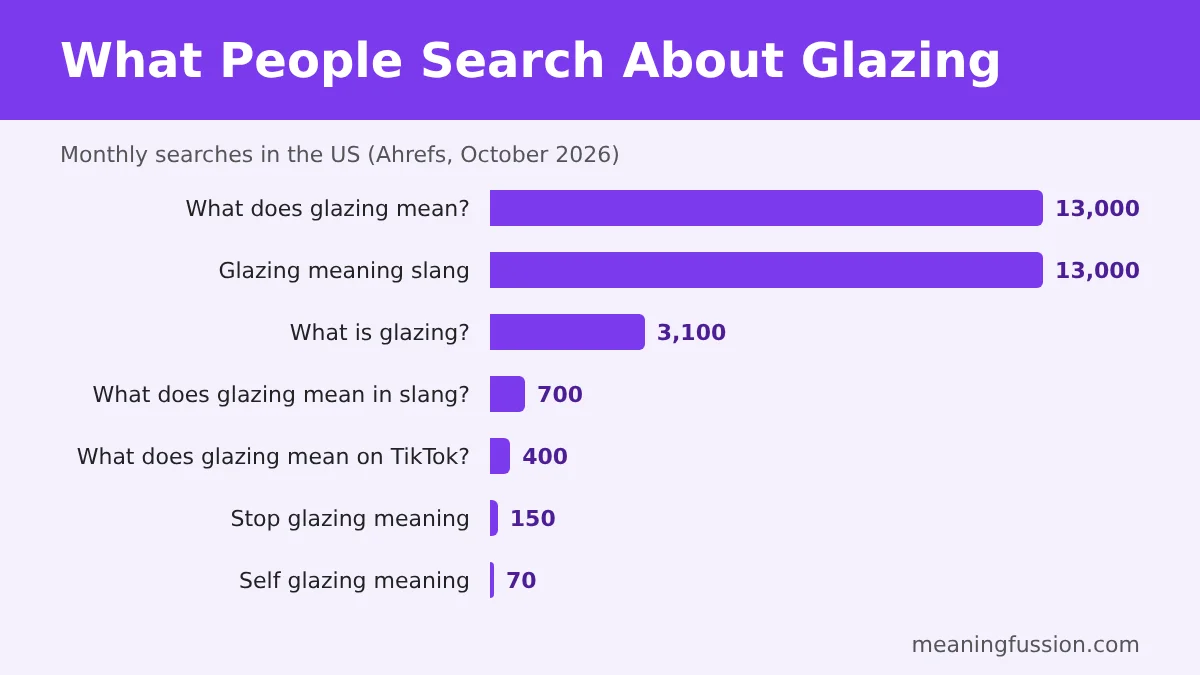
What People Search Most About Glazing (2026 Data)
We checked Ahrefs keyword data (United States, October 2026) to see what people actually ask about glazing.
| What people search | Monthly searches (US) | Short answer |
|---|---|---|
| What does glazing mean? | 13,000 | In slang, praising someone too much. |
| Glazing meaning slang | 13,000 | Overpraising or overhyping someone. |
| What is glazing? | 3,100 | Depends on context: slang, windows, pottery or food. |
| What does glazing mean in slang? | 700 | Excessive, unearned praise. |
| What does glazing mean on TikTok? | 400 | The same: hyping someone up too much. |
| Stop glazing meaning | 150 | “Stop overpraising” or “calm down.” |
| Self glazing meaning | 70 | Praising or bragging about yourself. |
Related Slang Guides
- Simp Meaning: What Does Simping Mean
- Cooked Slang Meaning
- Aura Meaning in Slang
- Aura Farming Meaning
- Rizz Meaning
- Delulu Meaning in Text
- Crash Out Meaning
- Gen Z Slang Dictionary
- Gen Z Slang for Parents
FAQs About Glazing Meaning
What does glazing mean in slang?
In slang, glazing means praising someone way too much. The praise sounds fake, over the top or unearned, like calling an average player “the GOAT.”
What does glazing mean from a girl?
It means the same from anyone: she thinks someone is praising a person way too much. If she says you are glazing her, she is teasing you for overdoing the compliments.
What does “stop glazing me” mean?
It means “stop flattering me so much.” People say it when the compliments feel like too much, or when they think you are buttering them up to get something.
What does “don’t be glazing me” mean?
It means “don’t flatter me so much,” often because the person thinks you want something from them.
Is glazing a compliment?
No. Glazing describes praise that went too far. Calling someone a glazer is a light insult, usually said as a joke between friends.
What does glazing mean on TikTok?
On TikTok, glazing means the same thing: overhyping a creator, celebrity, athlete or friend. Comments like “the glazing in this comment section is crazy” call out fans who praise too much.
Is glazing Gen Z slang?
Yes. It is one of the most popular Gen Z and Gen Alpha words, mostly used online, in gaming streams and in group chats.
Is glazing a bad word to say at school?
Glazing is not a swear word, but it has a crude second meaning online. It is fine with friends, but better to say “overpraising” or “sucking up” with teachers or at work.
What is a synonym for glazing?
Common synonyms are overhyping, sucking up, buttering up, brown-nosing, fanboying and dickriding (crude). Older slang words with a similar idea are “kissing up” and “laying it on thick.”
What is the opposite of glazing?
Hating, or giving someone unfair criticism. If glazing is too much praise, hating is too much negativity.
What does “eyes glazing over” mean?
It is a normal English phrase, not Gen Z slang. Someone’s eyes “glaze over” when they look bored, tired or zoned out.
Conclusion
Glazing is slang for praising someone way more than they deserve. You will hear it most as “stop glazing” in sports debates, stream chats and comment sections. It is playful, not a swear word, but keep it for casual chats. And if someone calls you a glazer, you now know exactly what they mean.
So the next time someone tells you to stop glazing, take it lightly. They are not saying your kindness is bad. They are only saying your praise went a little too far. Keep compliments honest and specific, and nobody will call you a glazer. And if you are the one doing the teasing, keep it friendly, because the goal is a laugh, not hurt feelings.

I’m Rose Lily, a writer at MeaningFussion. For the past 3 years I’ve been writing about Gen Z slang, texting abbreviations, social media terms and internet language. I explain what people mean in texts, chats, TikTok, Instagram and Snapchat in simple words, with real examples and easy ways to reply.
