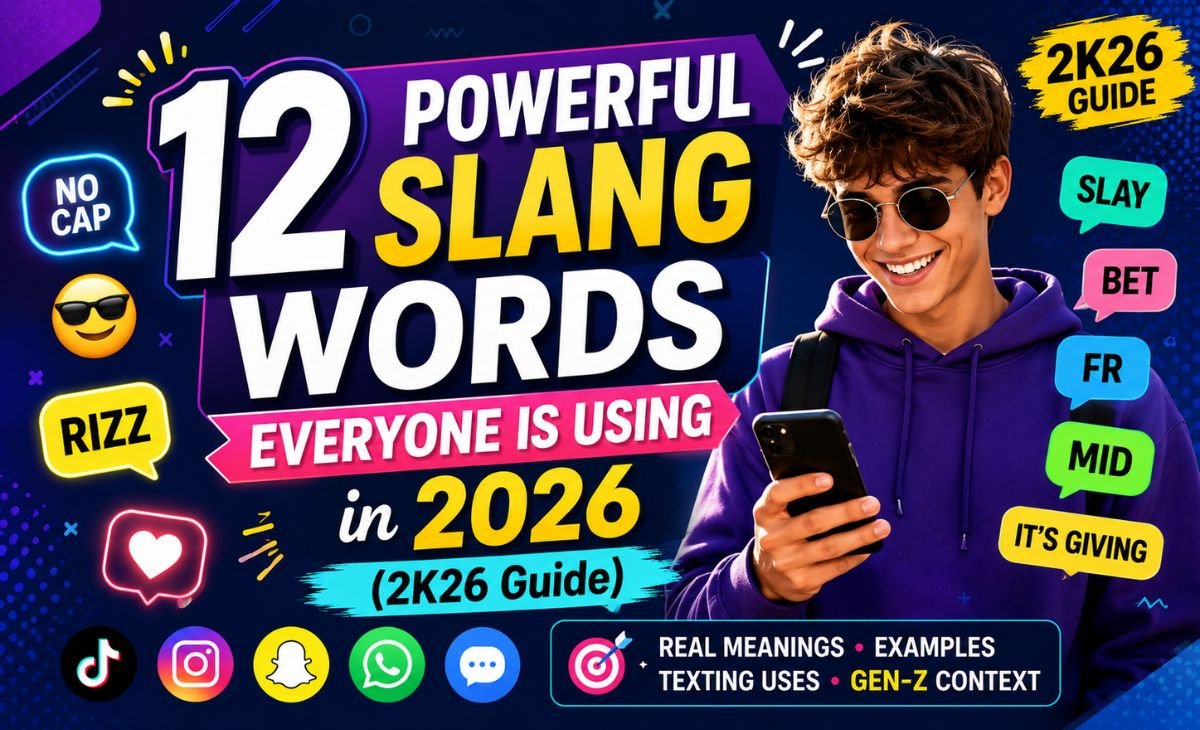
Language changes constantly, but slang words in 2026 are evolving faster than ever. TikTok, Instagram, Snapchat, Powerful Slang Words Discord, gaming communities, memes, and group chats can turn a new expression into viral internet slang almost overnight.
If you have ever seen someone write “That ate,” “No cap,” “You got rizz,” or “I’m cooked” and wondered what they meant, you are not alone. Modern Gen Z slang can sometimes feel like a completely different language.
The good news? You do not need to memorize hundreds of terms. Learning a few of the most popular slang words 2026 can make social media posts, texting conversations, comments, and online discussions much easier to understand.
Here are 12 powerful and widely recognized slang terms to know in 2026, along with their meanings and simple examples.
Quick Reference: 25 Slang Words Everyone Is Using in 2026
Here are the 12 slang words you’ll hear most often in 2026. The full list of 25, with meanings and examples, is below:
- No Cap – Not lying, telling the truth. “That movie was insane, no cap.”
- Bet – Agreement or confirmation. “Meet at 6?” “Bet.”
- Sus – Suspicious or questionable. “Why’s he acting so sus?”
- Lowkey / Highkey – Somewhat vs. openly. “I’m lowkey nervous, but highkey excited.”
- Rizz – Charisma, especially romantic charm. “He’s got serious rizz.”
- Ate – Did something exceptionally well. “She ate that performance.”
- Hits Different – Something feels uniquely better in the moment. “This song hits different at night.”
- Main Character Energy – Living boldly, like you’re the lead in your own story.
- NPC – Someone acting robotic or without independent thought.
- Delulu – Delusional, usually self-aware and joking. “I’m delulu but it’s fun.”
- Touch Grass – Telling someone to log off and reconnect with reality.
- Slay – Doing something impressively well. “You slayed that presentation.”
| Slang Word | Meaning | Common Use |
|---|---|---|
| Rizz | Charm or flirting ability | Dating, social media |
| Ate | Did something extremely well | TikTok, Instagram |
| No Cap | Seriously; no lie | Texting, comments |
| Cap | A lie or exaggeration | Texting, memes |
| Delulu | Delusional, often jokingly | Relationships, memes |
| Mid | Average or disappointing | Reviews, opinions |
| Sus | Suspicious or questionable | Gaming, texting |
| Slay | Do something impressively well | Fashion, achievements |
| Bet | Okay, agreed, definitely | Texting, conversation |
| Cooked | In trouble or out of options | Memes, gaming |
| Aura | A person’s cool or impressive presence | Social media |
| Lock In | Focus seriously on a task | School, work, gaming |
| Ghosting | Suddenly stopping all contact | Dating, friendships |
| Lowkey / Highkey | A little vs. openly | Texting, captions |
| Hits Different | Feels special or stronger | Music, food, moments |
| Main Character Energy | Acting like the star of the story | TikTok, Instagram |
| NPC | Boring or robotic person | Gaming, memes |
| Touch Grass | Go offline, take a break | Comments, memes |
| Simp | Does too much for a crush | Dating, memes |
| Whipped | Very controlled by love | Relationships |
| Crash Out | Lose control, react badly | TikTok, texting |
| Aura Farming | Trying to look cool on purpose | TikTok, sports |
| Sneaky Link | Secret romantic partner | Dating, social media |
| IJBOL | I just burst out laughing | Texting, X |
| Oomf | One of my followers | X, TikTok |
| Rack | $1,000 | Money talk, music |
What Are Powerful Slang Words in 2026?
Slang refers to informal words, phrases, and expressions used in casual communication. Unlike formal English, slang is often playful, shortened, humorous, ironic, or influenced by internet culture.
Where These Slang Words Spread in 2026
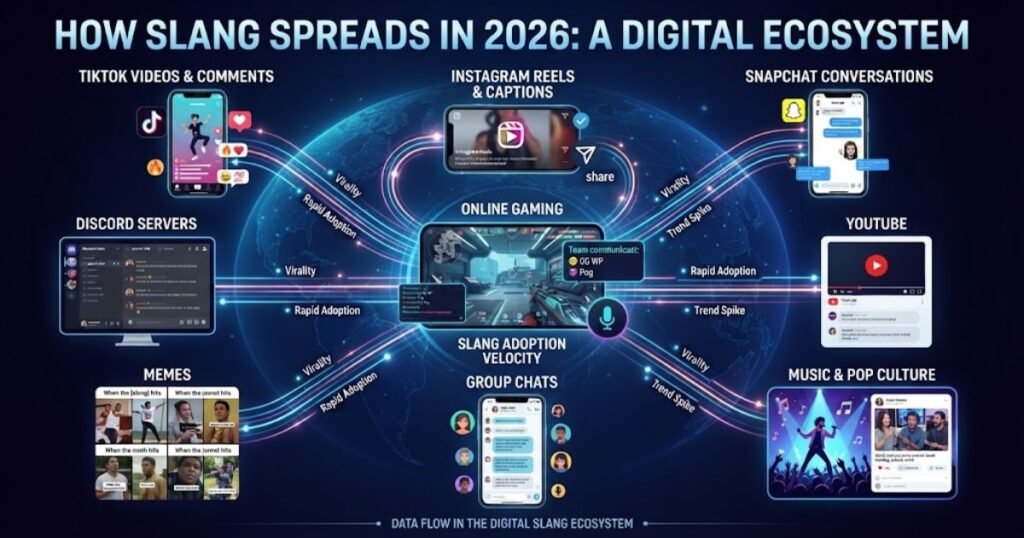
Modern slang is also highly dependent on context. A word can have one meaning in a dictionary but communicate something completely different online.
1. Rizz
Meaning: Charm, charisma, or the ability to attract or impress someone, especially romantically.
“Rizz” became one of the most recognizable modern slang terms and is still widely understood in online conversations.
Example:
“He has serious rizz. Everyone likes talking to him.”
You may also see phrases such as W rizz, unspoken rizz, or rizz up.
you can read this article “LOK Meaning in Text 2026: What Does “LOK” Mean in Social Media?“
2. Ate
Meaning: Did something extremely well.
When someone says “You ate,” they are usually giving strong praise. It is especially common when talking about someone’s outfit, performance, makeup, dance, or content.
Example:
“She absolutely ate with that outfit.”
Another popular expression is “ate and left no crumbs,” meaning someone performed exceptionally well.
3. No Cap
Meaning: Seriously, honestly, or without lying.
“No cap” is used when someone wants to emphasize that they are telling the truth.
Example:
“That was the best movie this year, no cap.”
It can be used in texts, comments, conversations, and memes.
Cap
The opposite expression is cap, which means a lie, false statement, or exaggeration.
Example:
“You said you finished the whole project in one hour? That’s cap.”
Together, cap and no cap are among the most recognizable texting slang expressions.
4. Delulu
Meaning: A playful shortened form of “delusional.”
“Delulu” is normally used humorously rather than as a serious description. People often use it when joking about unrealistic hopes, especially in relationships, celebrity fandoms, or personal goals.
Example:
“I think my crush liked my story, so obviously we’re getting married. I’m being delulu.”
The term is strongly associated with online humor and fandom culture.
5. Mid
Meaning: Average, ordinary, or disappointing.
If someone calls a movie, song, meal, game, or experience “mid,” they are saying it is not terrible but also not particularly impressive.
Example:
“The new restaurant was kind of mid.”
Because it is short and easy to use, mid slang appears frequently in online reviews and casual conversations.
6. Sus
Meaning: Suspicious, questionable, or sketchy.
“Sus” became especially popular through gaming culture and is now common in everyday internet slang.
Example:
“Why did he suddenly leave the group chat? That’s sus.”
You can use it when someone’s behavior seems strange or when something does not look trustworthy.
7. Slay
Meaning: To do something extremely well or look impressive.
“Slay” is generally positive. Someone might use it to compliment an outfit, performance, achievement, hairstyle, or overall appearance.
Example:
“You slayed that presentation!”
You may also see slay queen, slay era, or simply “slay” as a reaction.
Although the word is not new, it remains recognizable in modern social media slang.
8. Bet
Meaning: Okay, agreed, sure, or definitely.
“Bet” is a short way of showing agreement or confirming that you understand.
Example:
“Meet me at 7?”
“Bet.”
It works particularly well in texting and casual conversations because it is quick and informal.
9. Cooked
Meaning: In trouble, exhausted, defeated, or out of options.
The meaning of cooked depends heavily on context. Someone can be “cooked” because they are exhausted, losing a competition, unprepared, or facing a difficult situation.
Example:
“I didn’t study for the exam. I’m cooked.”
You may also hear “let him cook,” which means allowing someone to continue because they may be doing something impressive or interesting.
10. Aura
Meaning: A person’s impressive, confident, or cool presence.
In current internet slang, aura often describes someone’s overall vibe or social presence.
Example:
“He walked into the room like he owned it. Bro has insane aura.”
The term is also used jokingly with phrases such as aura points, where people pretend that cool actions increase someone’s score.
11. Lock In
Meaning: To focus seriously and stop getting distracted.
“Lock in” is useful for talking about studying, working, exercising, gaming, or completing an important goal.
Example:
“Final exams are next week. Time to lock in.”
It can also be used as encouragement:
“Come on, lock in!”
This expression has become especially common in motivational posts, gaming communities, and short-form videos.
12. Ghosting
Meaning: Suddenly stopping communication with someone without explaining why.
Ghosting usually refers to relationships, friendships, dating, or online conversations.
Example:
“We were talking every day, then he completely ghosted me.”
The related term ghosted describes someone who has experienced this behavior.
Although ghosting is not a brand-new expression, it remains useful because online communication makes disappearing from conversations extremely easy.
13. Lowkey / Highkey
Meaning: “Lowkey” means a little, quietly or secretly. “Highkey” means openly or very much.
Example:
“I’m lowkey nervous about the exam, but highkey excited for the trip.”
People often use both words in one sentence to show a contrast between what they hide and what they show.
14. Hits Different
Meaning: Something feels special, better or more emotional than usual.
Example:
“Coffee at 6 a.m. before a road trip just hits different.”
It is used for food, music, places and moments that feel stronger in a certain situation.
15. Main Character Energy
Meaning: Acting confident, like you are the star of your own movie.
Example:
“She walked into the party in that outfit with full main character energy.”
It is usually a compliment, but it can also tease someone who acts like everything is about them.
16. NPC
Meaning: Someone who acts boring, robotic or without their own opinions, like a “non-player character” in a video game.
Example:
“He just repeats whatever is trending. Total NPC behavior.”
The term comes from gaming and is used as a light insult online.
17. Touch Grass
Meaning: Telling someone to go outside and take a break from the internet.
Example:
“You’ve been arguing in the comments for three hours. Go touch grass.”
It is a joking way to say someone is too online.
18. Simp
Meaning: Someone who does too much for a person they like, hoping to win their attention.
Example:
“He bought her lunch every day for a month and she still left him on read. Big simp energy.”
It can be an insult or a joke between friends. Read our full guide: Simp meaning.
19. Whipped
Meaning: Being so in love that your partner can get you to do almost anything.
Example:
“He cancelled guys’ night again because she asked. He’s whipped.”
Friends use it to tease, usually in a playful way. Read our full guide: Whipped meaning.
20. Crash Out
Meaning: Losing control and reacting badly, often with anger, after being pushed too far.
Example:
“If they cancel my order one more time, I’m going to crash out.”
On TikTok it is often used jokingly for small, everyday frustrations. Read our full guide: Crash Out meaning.
21. Aura Farming
Meaning: Doing things on purpose to look cool, calm or impressive and gain “aura.”
Example:
“He fixed his hair in slow motion before the photo. Pure aura farming.”
It grew out of the “aura points” trend on TikTok. Read our full guide: Aura Farming meaning.
22. Sneaky Link
Meaning: A secret romantic or casual partner that someone hides from others.
Example:
“She won’t post him anywhere. He’s definitely her sneaky link.”
The term is mostly used on social media and in jokes about dating. Read our full guide: Sneaky Link meaning.
23. IJBOL
Meaning: “I just burst out laughing”, a stronger version of LOL.
Example:
“Your dog wearing sunglasses? IJBOL 😂”
It became popular with K-pop fans and spread across TikTok and X. Read our full guide: IJBOL meaning.
24. Oomf
Meaning: “One of my followers”, used to talk about someone you follow online without naming them.
Example:
“Oomf just posted the best meme I’ve seen all week.”
It is very common on X (Twitter) and TikTok. Read our full guide: Oomf meaning.
25. Rack
Meaning: One thousand dollars. A few racks means a few thousand.
Example:
“Those sneakers cost two racks.”
It comes from hip-hop and is used when talking about money and prices. Read our full guide: Rack meaning.
Why Are These Slang Words So Popular in 2026?
There are several reasons modern slang spreads so quickly.
1. Social Media Makes Words Viral
TikTok, Instagram, YouTube, Snapchat, and other platforms allow expressions to reach millions of people in a very short time.
2. Slang Makes Communication Faster
A single word can communicate an entire reaction.
For example, saying “mid” can replace a longer explanation that something was only average.
3. Memes Influence Everyday Language
Internet memes constantly create, remix, and popularize expressions. Some words begin as jokes but eventually become part of everyday communication.
4. Slang Creates Group Identity
Using the same expressions can make people feel connected to a particular online community, generation, fandom, or interest group.
Modern slang is therefore more than vocabulary. It can communicate humor, attitude, identity, and social context. Current research and guides on Gen Z and Gen Alpha language similarly emphasize that knowing when and where a term is appropriate can matter as much as knowing its dictionary definition.
How to Use 2026 Powerful Slang Words Naturally
Knowing slang is different from using it naturally. Follow these simple tips:
- Understand the meaning first. Never use a word simply because it is trending.
- Pay attention to context. Some expressions work online but sound strange in formal conversations.
- Match the tone. Slang is generally best for casual communication.
- Do not overuse it. Putting five slang words into one sentence can sound forced.
- Watch how native users use it. Social media comments can help you understand tone and context.
- Avoid slang in formal writing. Job applications, academic assignments, and professional emails usually require standard language.
Gen Z Slang vs. Gen Alpha Powerful Slang Words
Gen Z slang and Gen Alpha slang often overlap, but they are not exactly the same.
Gen Z slang includes familiar terms such as rizz, slay, no cap, cap, mid, bet, and ghosting. Gen Alpha internet culture has also introduced or popularized highly meme-driven expressions and absurd humor.
The important thing to remember is that these categories are not fixed. Slang constantly moves between generations, platforms, communities, and countries.
A word that starts as niche internet language can eventually become mainstream.
Are These Powerful Slang Words Used in Real Life?
Yes. Many popular slang terms are used both online and offline, although usage depends on the person, age group, location, and social setting.
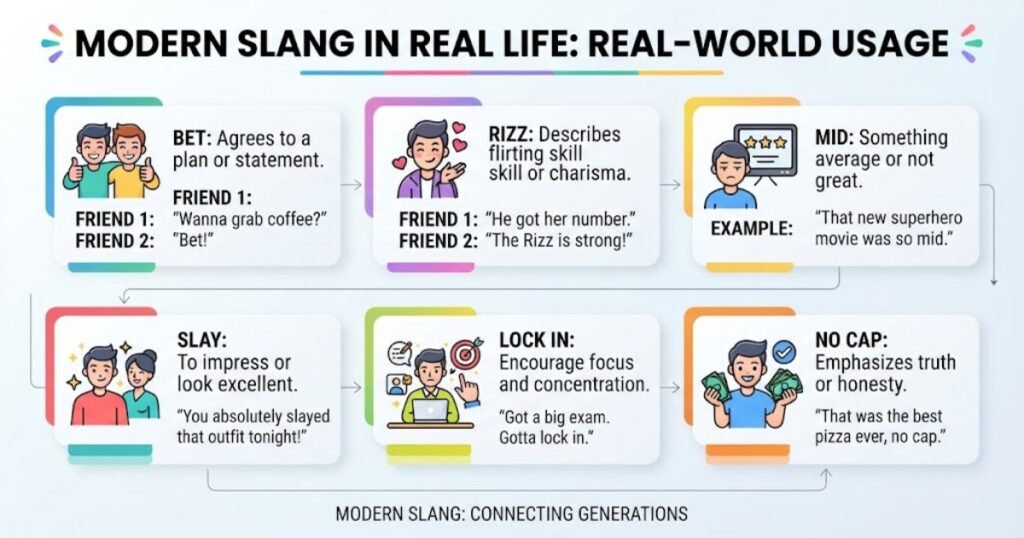
However, not every trending expression sounds natural when spoken aloud. Some terms remain primarily connected to memes, gaming, or social media.
Frequently Asked Questions
What is the most popular slang word in 2026?
There is no single official winner, but terms such as rizz, ate, no cap, slay, mid, aura, and cooked are widely recognized in 2026 internet culture.
What does “rizz” mean in slang?
Rizz means charm or charisma, especially someone’s ability to attract or impress another person.
What does “no cap” mean?
No cap means “no lie,” “seriously,” or “I am telling the truth.”
What does “mid” mean in texting?
Mid describes something considered average, ordinary, or disappointing.
What does “ate” mean in Gen Z slang?
Ate is a compliment meaning someone did something exceptionally well.
What does “delulu” mean?
Delulu is a playful shortened form of “delusional,” usually used jokingly about unrealistic expectations.
What does “cooked” mean in slang?
Cooked can mean someone is in trouble, exhausted, defeated, or has little chance of success, depending on context.
What does “lock in” mean?
Lock in means to focus seriously on a task and avoid distractions.
Is Gen Z slang appropriate for formal writing?
Usually not. Gen Z slang is best suited to casual conversations, texting, social media, and informal communication.
Final Thoughts
The world of slang words in 2026 moves incredibly fast. A phrase can become popular through a TikTok video, meme, gaming community, or celebrity post and suddenly appear everywhere.
Words such as rizz, ate, no cap, delulu, mid, sus, slay, bet, cooked, aura, lock in, and ghosting are useful examples of how modern internet language continues to evolve.
You do not need to use every trending word yourself. The real advantage is understanding what people mean, recognizing the tone, and knowing when a particular expression fits the conversation.
Slang is constantly changing, so today’s viral word may become tomorrow’s outdated phrase. Keep an eye on social media, online communities, and digital culture—and you will be much less likely to feel lost the next time someone says, “Bro, that was actually a W.”
Got a confusing text? Paste the whole message into our free Slang Translator to read it in plain English, or look up any single term with the Abbreviation Decoder.

Rose Lily
I’m Rose Lily, a writer at MeaningFussion, where I explain Gen Z slang, texting abbreviations, social media terms, internet language, and trending expressions in simple words. I create easy-to-understand guides with meanings, examples, and real-life usage to help readers understand what people mean in texts, chats, TikTok, Instagram, Snapchat, and other online conversations.
3 thoughts on “25 Slang Words Everyone Uses in 2026 (With Meanings & Examples)”