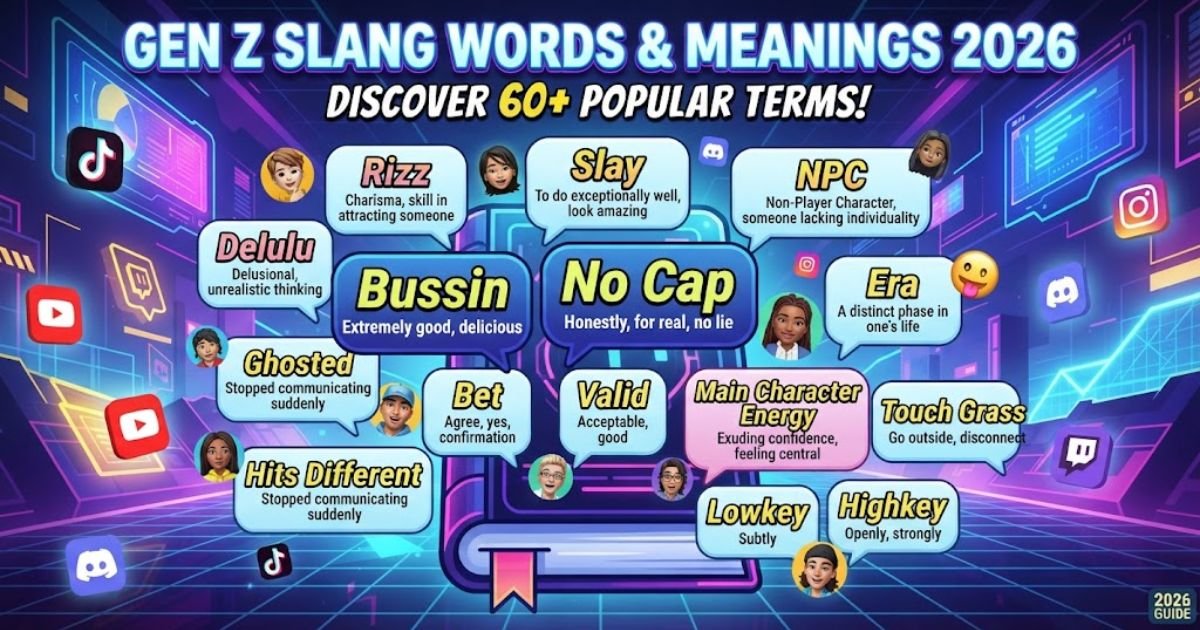
If you’ve ever seen words like Rizz, NPC, Slay, Delulu, Era, Bussin, or No Cap online and wondered what they mean, you’re not alone. Gen Z slang changes quickly and is heavily influenced by TikTok, Instagram, gaming, memes, music, and online communities.
This Ultimate Gen Z Slang Dictionary 2026 explains popular terms in simple English, with quick examples so you can understand how people actually use them in texting and social media.
Gen Z Slang Dictionary: Quick Meanings
| Gen Z Term | Meaning | Example |
|---|---|---|
| Rizz | Charm or flirting ability; especially the ability to attract someone through confidence and smooth conversation. | “He has serious rizz.” |
| NPC | Originally a gaming term for a non-playable character. Online, it describes someone acting robotic, predictable, or lacking originality. | “Bro is acting like an NPC today.” |
| Slay | To do something extremely well or look amazing. It is usually a strong compliment. | “You absolutely slayed that outfit!” |
| Delulu | Playful shorthand for “delusional.” It describes unrealistic or overly optimistic thinking, often jokingly. | “I’m delulu if I think my crush will text first.” |
| Era | A period or phase of someone’s life, style, behavior, or interests. Often used with a specific identity or mood. | “I’m in my fitness era.” |
| Bussin | Extremely good or delicious, especially when talking about food. | “This burger is bussin!” |
| No Cap | No lie; seriously; telling the truth. | “That was the best pizza, no cap.” |
you can read this article about “Gen Z Meaning in Text: Complete Guide to Gen Z Slang & Messaging Terms“
1. Rizz
Rizz means charm or charisma, particularly the ability to attract or impress someone through confidence and social skills. The word is derived from “charisma” and became one of the most recognizable modern slang terms.
Rizz: Charm or charisma, especially the ability to attract or impress someone.
Example:
“Did you see how smoothly he talked to her? He has rizz.”
You can also hear rizz up, meaning to flirt with or charm someone.
2. NPC
NPC originally stands for Non-Player Character, a character in a video game controlled by the game rather than the player. On social media, it can describe someone who behaves in a repetitive, robotic, predictable, or scripted way.
NPC: Someone who behaves in a predictable, repetitive, or robotic way.
Example:
“He keeps saying the same thing every day. Total NPC behavior.”
The word can be humorous, but calling someone an NPC may also sound insulting depending on the context.
NPC: Someone who behaves in a predictable, repetitive, or robotic way.
3. Slay
Slay is used to praise someone for doing something exceptionally well or looking amazing. It can describe an outfit, performance, achievement, makeup look, presentation, or overall appearance.
Example:
“Your new outfit is amazing. You slay!”
In online conversations, slay is usually positive and encouraging.
Slay: To do something extremely well or look amazing.
4. Delulu
Delulu is playful shorthand for delusional. It is often used humorously when someone has unrealistic expectations or an overly optimistic fantasy.
Example:
“She thinks her favorite celebrity will notice her comment. She’s so delulu!”
A popular playful phrase is “delulu is the solulu,” meaning that being unrealistically optimistic is jokingly presented as the solution.
Delulu: A playful slang term for “delusional,” often used for unrealistic or overly optimistic thinking.
5. Era
Era refers to a particular phase, period, style, or lifestyle. On social media, people often describe their current interests or personal transformation as an “era.”
Examples:
- “I’m in my study era.”
- “Welcome to my travel era.”
- “She’s in her glow-up era.”
It is commonly used to describe a person’s current mood, goals, aesthetic, or lifestyle.
Era: A particular phase, period, lifestyle, or personal stage of someone’s life.
6. Bussin
Bussin generally means extremely good, especially when describing delicious food.
Example:
“This chicken is bussin!”
Although it is especially associated with food, online users sometimes use it more broadly to describe something they think is exceptionally good.
Bussin: Something that is extremely good or delicious, especially food.
7. No Cap
No cap means “no lie,” “for real,” or “I’m being completely serious.” The opposite expression is cap, which can mean a lie, exaggeration, or false statement.
Example:
“This is the best movie I’ve watched all year, no cap.”
If someone says “That’s cap,” they are basically saying, “That’s a lie” or “I don’t believe you.”
No Cap: No lie, seriously, or telling the truth.
Quick Tip for Using Gen Z Slang
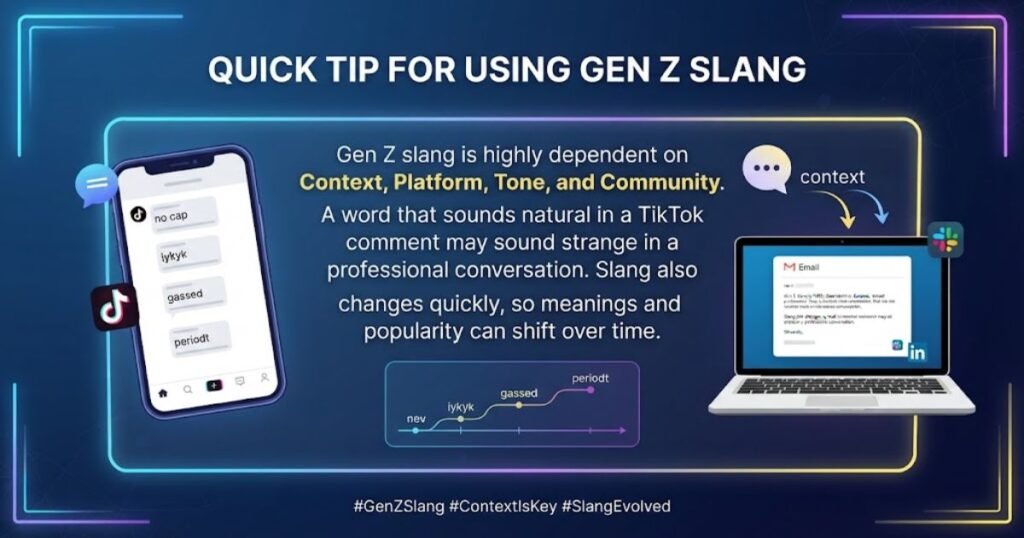
Gen Z slang is highly dependent on context, platform, tone, and community. A word that sounds natural in a TikTok comment may sound strange in a professional conversation. Slang also changes quickly, so meanings and popularity can shift over time.
Frequently Asked Questions About Gen Z Slang
What is Gen Z slang?
Gen Z slang refers to informal words, phrases, abbreviations, and expressions commonly used by Generation Z in texting, social media, gaming, memes, and online communities.
What are the most popular Gen Z slang words in 2026?
Some popular terms include rizz, NPC, slay, delulu, era, bussin, no cap, cap, lowkey, highkey, sus, cringe, GOAT, bet, vibe, and main character.
What does rizz mean?
Rizz means charm or charisma, especially someone’s ability to attract or impress another person through confidence and conversation.
What does NPC mean in Gen Z slang?
NPC originally means “Non-Player Character” in gaming. In Gen Z slang, it can describe someone who behaves in a predictable, repetitive, or robotic way.
What does slay mean?
Slay is a positive expression used to say that someone looks amazing or has done something extremely well.
What does delulu mean?
Delulu is a playful shortened form of delusional. It usually describes someone having unrealistic expectations or fantasies in a humorous way.
What does bussin mean?
Bussin generally means something is extremely good or delicious, especially food.
What does no cap mean?
No cap means “no lie,” “seriously,” or “I’m telling the truth.” It is commonly used to emphasize that someone is being honest.
Where is Gen Z slang commonly used?
Gen Z slang is frequently seen on TikTok, Instagram, Snapchat, YouTube, Discord, gaming platforms, and text messages.
Does Gen Z slang change over time?
Yes. Internet slang changes quickly. New words can become popular through social media, memes, music, gaming, and online communities, while older expressions may become less common.
Conclusion
The Ultimate Gen Z Slang Dictionary 2026 makes it easier to understand the constantly changing language of social media and texting. From rizz and slay to delulu, NPC, bussin, era, and no cap, these expressions can add personality and humor to online conversations.
Remember that slang is informal and highly dependent on context. A term that feels natural among friends or in a TikTok comment may not be appropriate in a professional or formal conversation.
As Gen Z vocabulary continues to evolve, this dictionary can help you stay updated with popular Gen Z slang meanings, texting terms, and social media expressions.